

Bridging the Gap: Enhancing Public Safety Through "Smart Perception"

Updated: Jan 19
In cities known for high safety standards, public spaces like metro stations and large-scale event venues are designed for efficiency and openness. Unlike airports, these hubs often lack compulsory X-ray or physical inspections, relying instead on human vigilance. However, even the most diligent security forces cannot monitor thousands of commuters simultaneously with perfect accuracy.
The challenge is to identify potential risks without compromising the flow of daily life. Since the recent tragic events in the Taipei Metro, we have seen a surge in media attention highlighting a new demand: First-Minute Danger Anticipation. At IntelliGienic, we believe this "first minute" is the most critical window in public safety. To master it, we must move beyond standard surveillance and toward a more integrated Smart Perception.

The "Golden Minute": Turning Seconds into Safety
The core value of AI in public safety is time. Much like early warning systems for natural disasters, intelligent vision solutions aren't about just recording a crime; they are about buying critical seconds for response.
Pre-emptive Pattern Recognition: While many current solutions focus on detecting a conflict as it happens, the next frontier is recognizing the pre-incident signatures—anomalous crowd surges, heat-based stress indicators, or the specific "friction" that precedes an event.
First-Minute Anticipation: We are seeing companies gain exposure for software that can "see" a weapon in seconds. This validates our vision: that the first 60 seconds of an anomaly are the "Golden Minute" where intervention can still prevent tragedy.
The Balanced Edge: Why Integration Matters
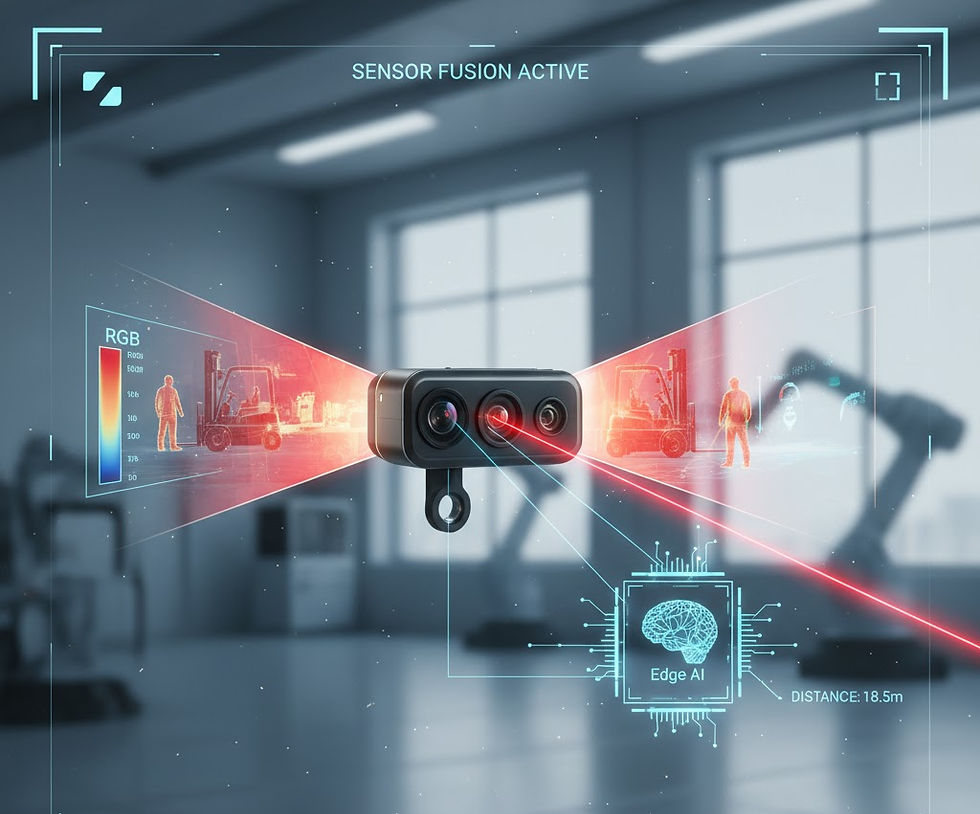
The recent spotlight on AI detection software is encouraging, but as a balanced player in this space, we know that a "software-only" approach is only half the solution. In high-stakes environments, the Integrated AI Vision—the marriage of high-performance hardware and Edge AI—is what ensures those critical seconds are captured.
Zero-Latency Response: By processing data "at the edge" (directly on the camera), alerts are triggered instantly. We don't rely on the cloud when lives are on the line; we process the vision where the eyes are.
Beyond Visible Light: Integrating thermal and acoustic sensors allows us to "see" what standard cameras cannot. Thermal fusion can detect the heat signature of unauthorized combustion or a person in distress even in crowded, low-light station tunnels.
Reliability in Chaos: In an emergency, hardware must be as smart as the software. An integrated system ensures that the "eyes" and the "brain" are perfectly synced to anticipate danger, not just react to it.
A Tech-Forward Approach to Public Welfare
As we look back at the lessons and forward to upcoming major gatherings, the integration of these technologies represents a shift from reactive security to proactive support.
Innovation should ultimately serve the quality of life. By focusing our creative efforts on smart, non-intrusive safety solutions, we can help ensure that our public spaces remain the safe, vibrant hubs they are meant to be. We aren't just giving machines eyes; we are giving our safety teams the "First-Minute" advantage they need to protect our community.


Comments